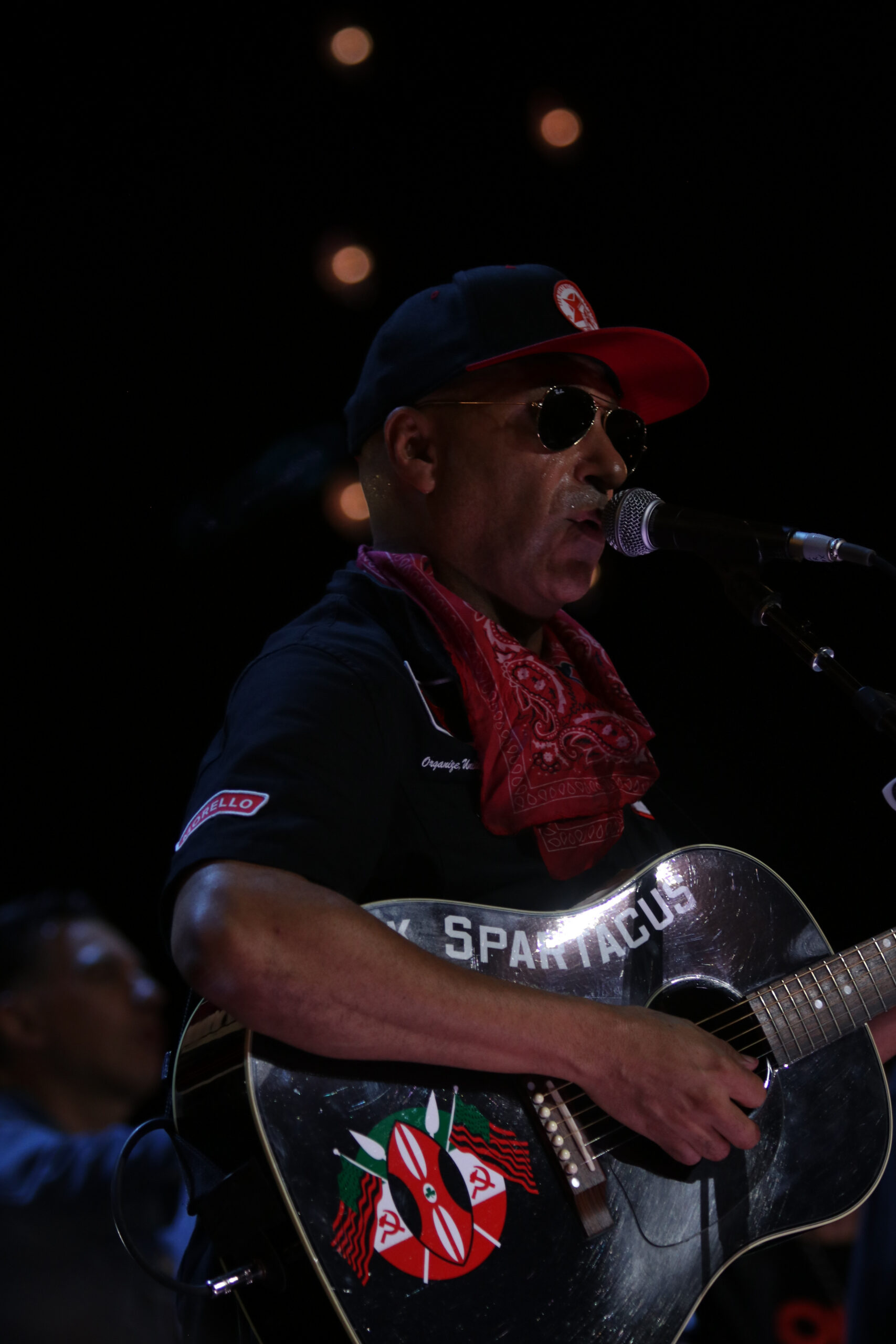
Photos by Mikaela Prien & Dean Rogers
Saturday, October 3, 2026. Where were you on that day?
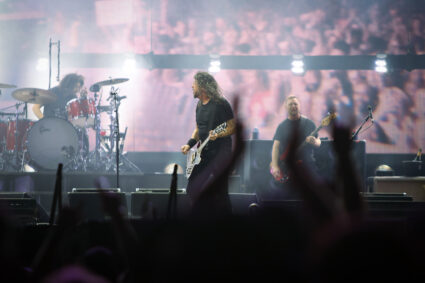
For the more than 20,000 people who packed Merriweather Post Pavilion that Saturday afternoon, the answer was simple: they were part of a rocking, epic event filled with talented musicians who came together to deliver a powerful message — power belongs to the people.
The Power to the People Festival delivered exactly what its name promised: great music, passionate performances, and a message that would stay with everyone long after the final note was played.
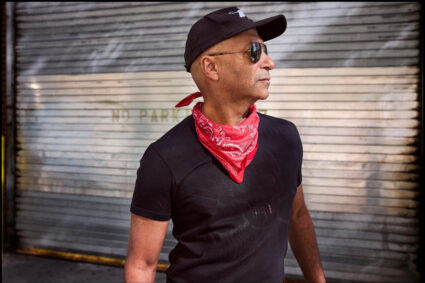
Organizer, activist, and musician Tom Morello kicked off the festivities by taking the stage at the Chrysalis to welcome the growing crowd and officially open the festival. He then introduced the first act of the day, San Diego-based hip-hop group The Neighborhood Kids.
They were the perfect choice to launch the festival. A rising force in conscious hip-hop, The Neighborhood Kids combine powerful lyricism with raw energy. Led by VERDE and AMON, the group brought slick rhymes, hard-hitting beats, and an unmistakable sense of purpose to the stage.
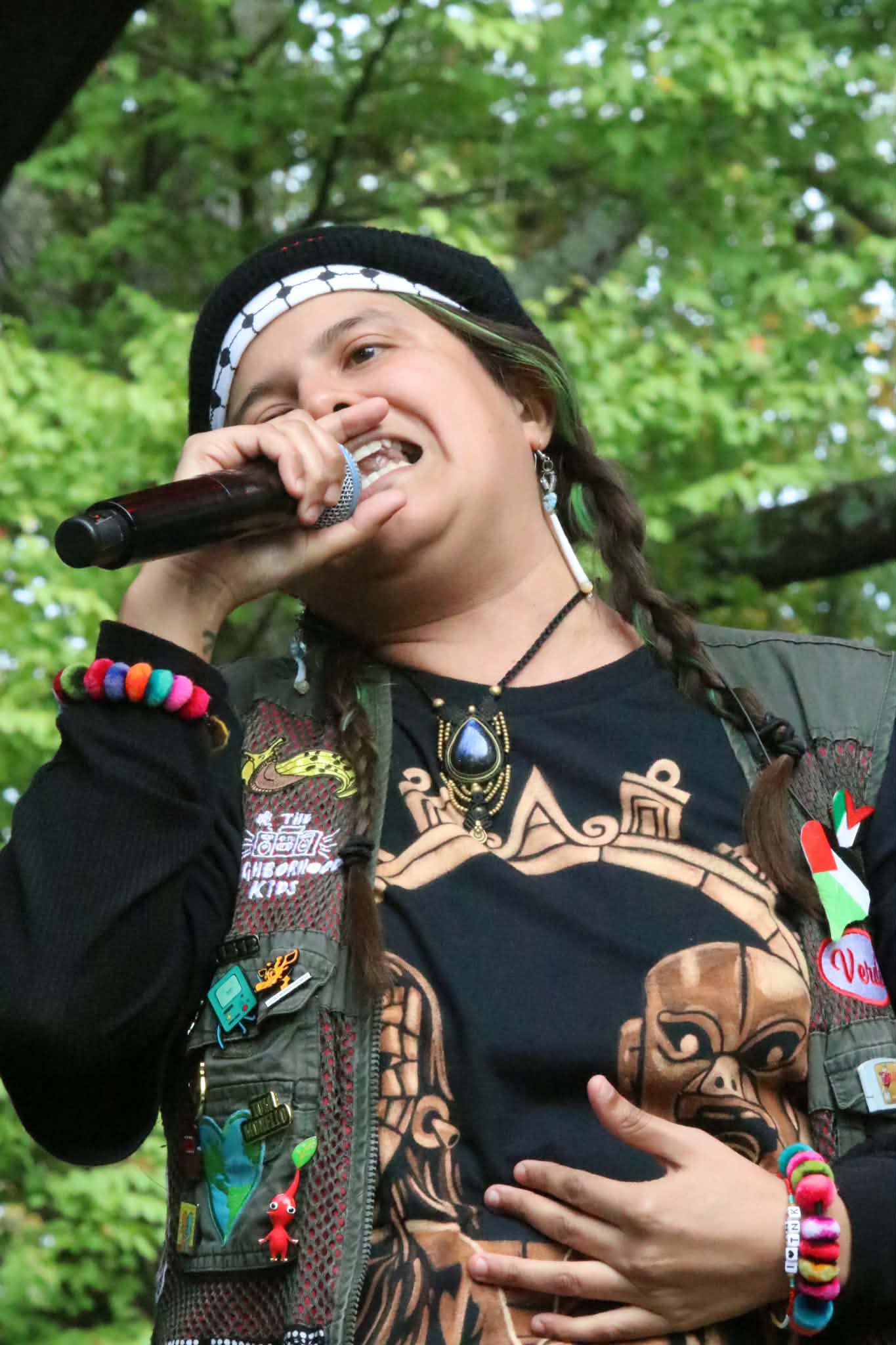
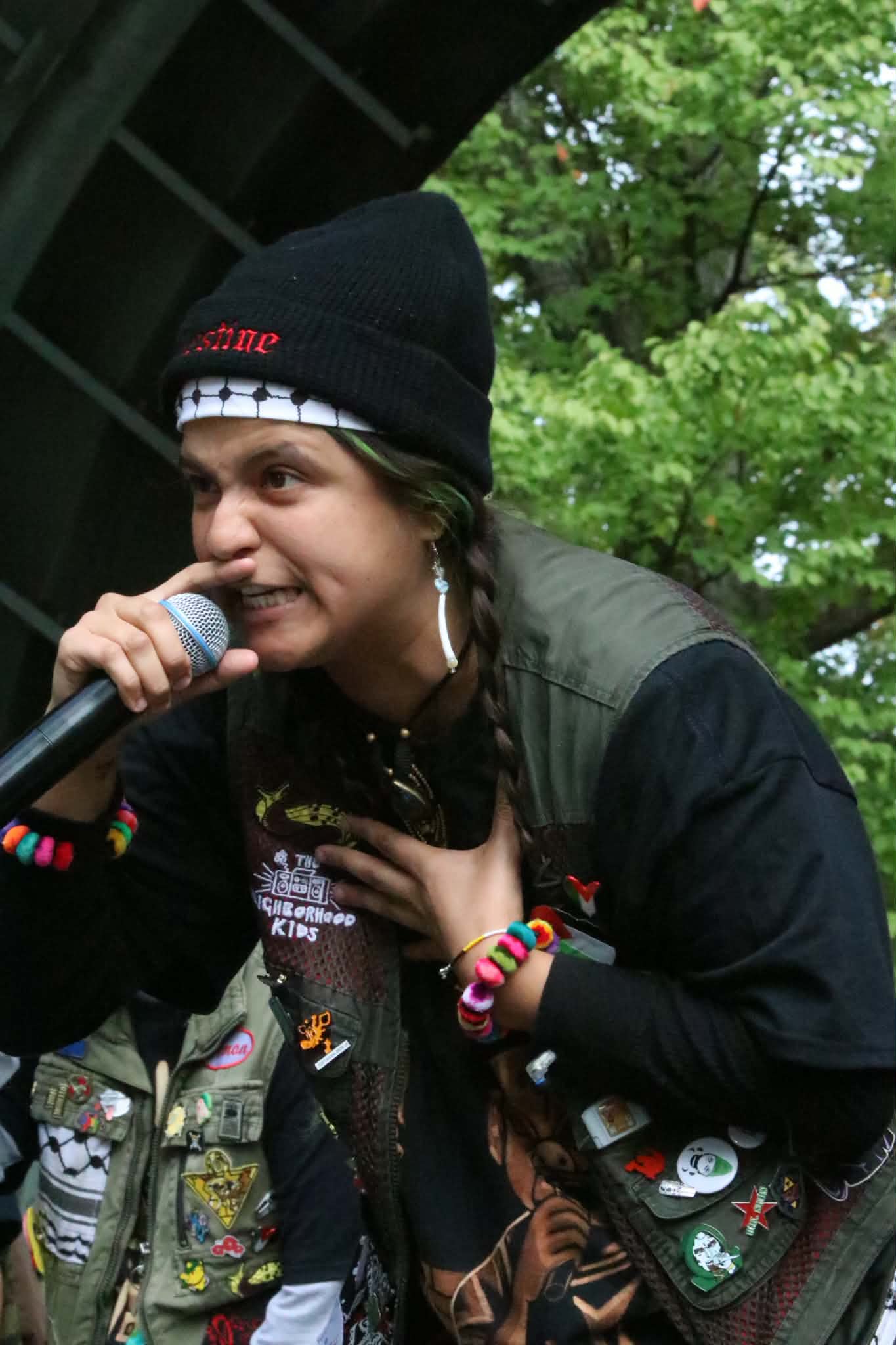
During their four-song set, the band dedicated its third song, “Third World Problems,” to the martyrs and journalists who lost their lives while telling the truth. Before launching into the song, AMON called on the crowd to raise their fists and shout, “Power to the People!” The audience responded enthusiastically — twice — setting the tone for the rest of the afternoon.
The band closed its set with “Kids in the Cages,” one of the most powerful moments of their performance. The song carried particular significance for the festival: when Morello first heard it, he was so impressed by its message and impact that it became a catalyst for bringing The Neighborhood Kids to the festival to perform it live.
It was a fitting way to begin a day built around music, activism, and the belief that the people have the power to make their voices heard.
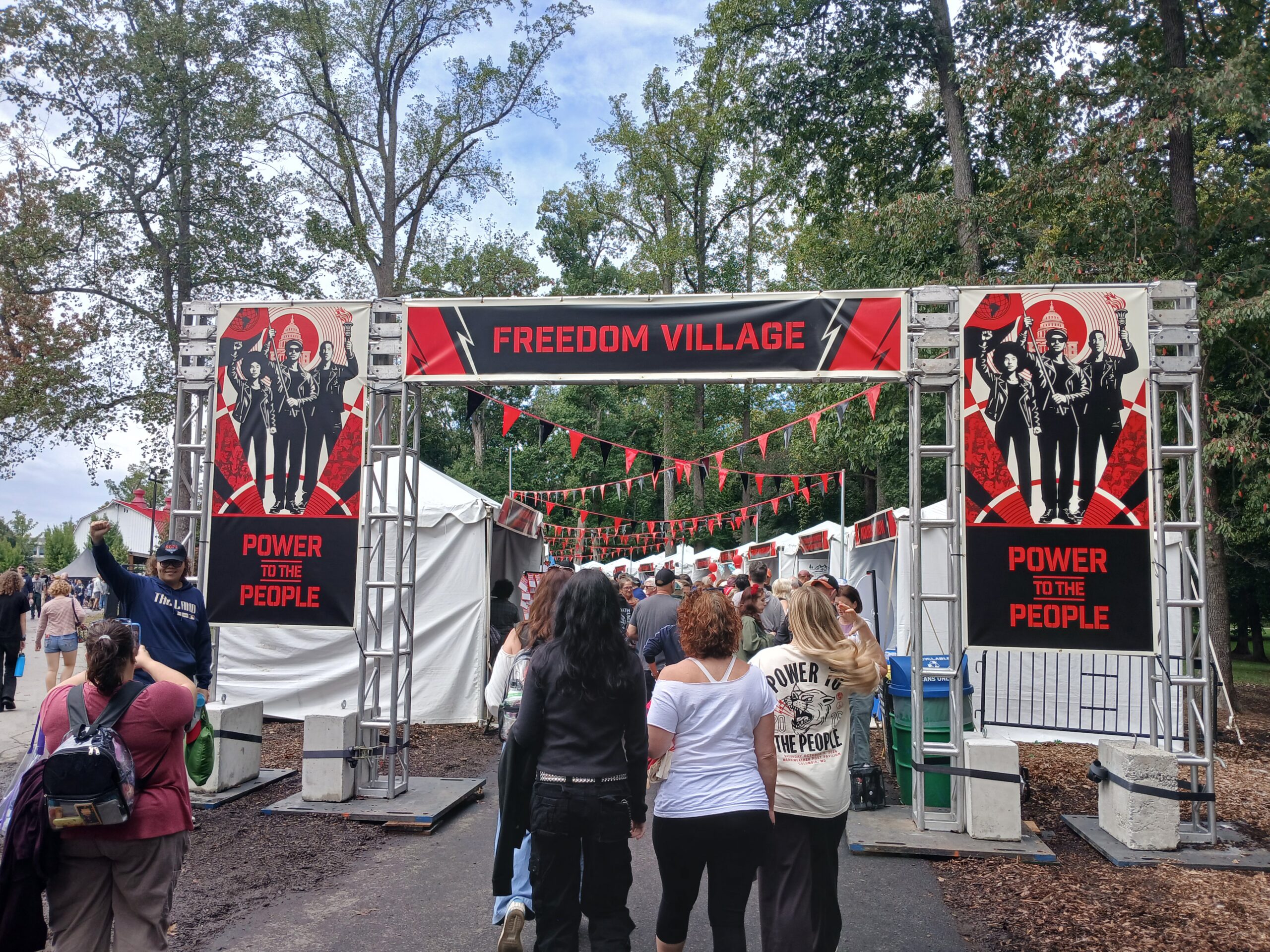
After that amazing kickoff, I made my way over to Freedom Village, an area featuring numerous local and national nonprofit organizations, including the American Foundation for Suicide Prevention, Trans Maryland, Rock the Vote and the National Domestic Workers Alliance, among many others. The village offered festivalgoers an opportunity to learn more about organizations working on issues affecting communities across the country and to get involved beyond the music.
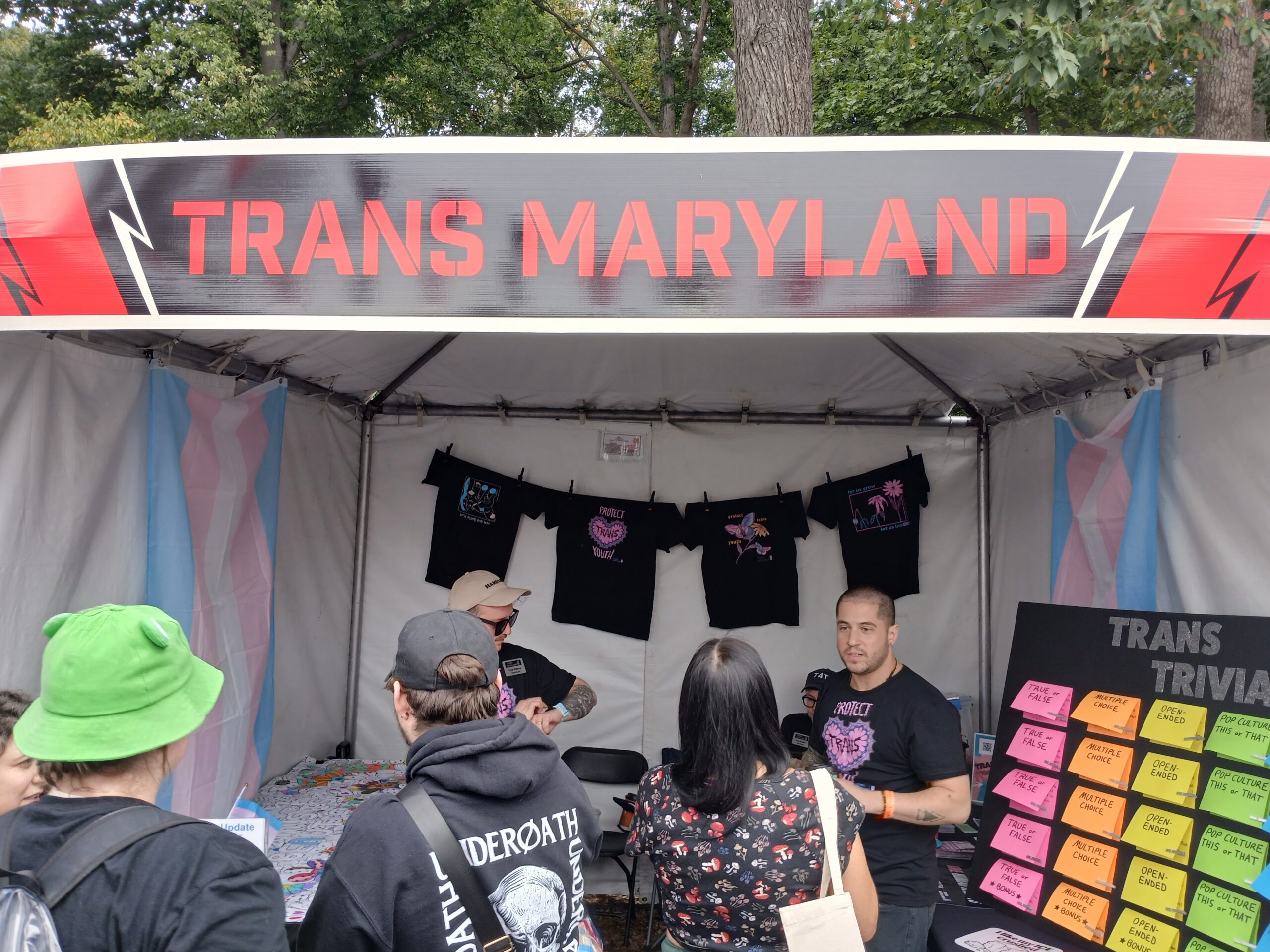
For me, the visit was also personal. At two of the nonprofit booths, I left messages honoring absent friends and family members whose lives had been affected by the issues these organizations represent. It was a powerful reminder that behind every cause are real people, real stories and real lives.
From there, I headed toward the Pavilion Stage for the next performance. Before the scheduled act could take the stage, however, Tom Morello came out to address the crowd about one of the festival’s artists who was unable to perform: Irish hip-hop trio Kneecap.
Morello explained that the group had been denied visas and was unable to enter the United States following controversy surrounding its political statements, including pro-Palestinian and anti-Israel messages during its April 2025 Coachella performance. Morello made his feelings about the decision unmistakably clear, responding with a blunt declaration: “Fuck Donald Trump.”
He then premiered his video featuring Kneecap, “Unconquered.” The song was created to capture an enduring spirit of resistance and opposition in the face of repression, making its presentation at the festival another powerful intersection of music and activism.
Then it was time for rapper and songwriter Grandson to take over the stage with a powerful seven-song set. He opened with “Autonomous Delivery Robot,” a timely and biting satire about the dehumanizing creep of modern automation, surveillance and corporate technology. Its rapid-fire storytelling and infectious energy immediately set the tone for what would become a dynamic performance.
Grandson followed with “Bury You,” “We Did It!!!” and “Oh No!!!”, keeping the energy high and the crowd fully engaged. Each song reinforced the socially conscious edge that has become a defining part of his music, blending hard-hitting rock and hip-hop influences with pointed commentary on the world around us.
That combination of art, music and activism was really at the heart of the Power to the People Festival — and it was a theme that continued off the main stage. After the halfway point of Grandson’s set, I headed over to Stage Left for a series of fireside chats, where artists and activists were given a platform to discuss the issues that inspire their work and their activism.
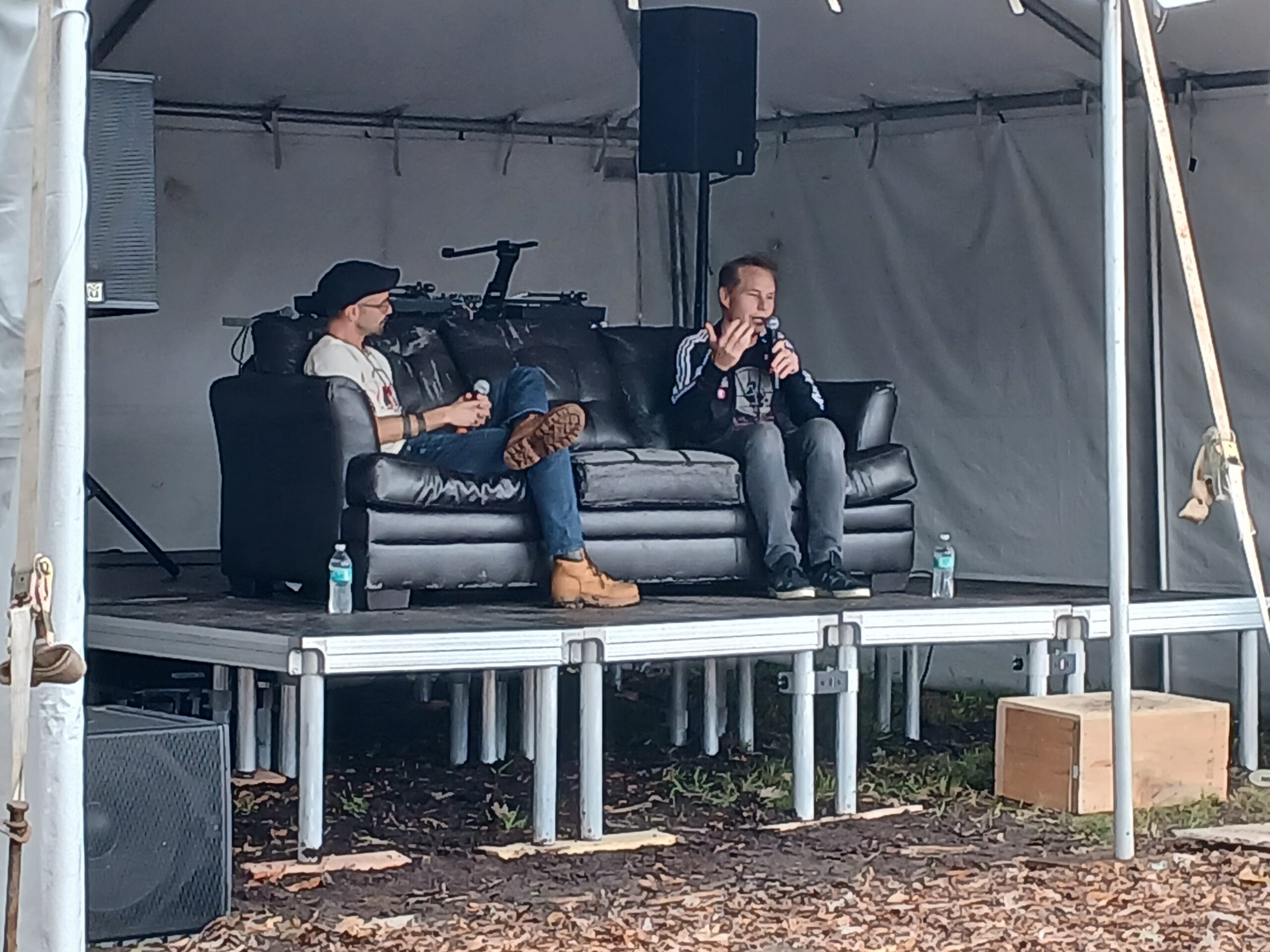
The only conversation I was able to attend featured renowned artist and activist Shepard Fairey, making it a particularly fitting follow-up to Grandson’s performance. Fairey has spent decades demonstrating how visual art can become a powerful form of political expression. He is perhaps best known for designing the iconic “Hope” poster for President Barack Obama’s 2008 presidential campaign, but he also designed the poster for the Power to the People Festival.
During the discussion, Fairey touched on a wide range of topics, including the rapid rise of artificial intelligence, how the political climate has changed since the Obama era, and his own evolution as an increasingly active voice in political and social activism.
If Grandson used music to challenge the status quo, Fairey demonstrated how a single image can do the same. His conversation offered a fascinating look at the intersection of art, politics and activism — three forces that were woven throughout nearly every aspect of the festival.
One of the biggest highlights of the festival came when actor and musician Jack Black took the stage with an incredibly talented group of young musicians — including Tom Morello’s son, Roman; Scott Ian’s son, Revel; Yokoya Soma; and Hugo Weiss — for a special Black Sabbath tribute set appropriately dubbed Jack Sabbath.
From the moment they launched into the first song, it was clear this was going to be something special. The young musicians paid loving tribute not only to the late, great Ozzy Osbourne, but also to the legendary band he helped make one of the most influential forces in heavy metal history.
Black looked every bit the part, dressed in a dark-blue long-sleeve shirt with white fringe hanging from the sleeves and the word “Ozzy” emblazoned across his chest in rhinestones. But it wasn’t just the outfit that captured the spirit of Ozzy — Black threw himself completely into the performance, bringing the same theatricality, humor and larger-than-life energy that audiences have come to love throughout his career.
The crowd absolutely devoured the three-song set.
By the time the band launched into the Black Sabbath classic “The Wizard,” Black was tearing into the harmonica with everything he had. The audience responded in kind, cheering, dancing and singing along as the School of Rock star delivered an exhilarating performance that felt like a genuine celebration of heavy metal.
Then came the moment that took an already extraordinary set into legendary territory.
As the final song began, Black brought out a very special surprise guest: original Black Sabbath bassist Geezer Butler. The legendary musician joined Jack Sabbath onstage for a thunderous rendition of “War Pigs.”
Seeing Black Sabbath’s original bassist standing onstage alongside this next generation of musicians was an unforgettable moment. The crowd erupted as Butler and the young performers shared the stage, bridging generations of heavy-metal musicians and fans in one spectacular performance.
What started as a fun tribute quickly became one of the festival’s most memorable moments. Jack Sabbath wasn’t simply a cover band — for those few songs, they captured the spirit, attitude and sheer joy of Black Sabbath.
If Jack Sabbath ever decides to take this show on the road, count me in. I’ll be there.
After the epic performance by Jack Sabbath, I headed back up the hill to the Chrysalis Stage to see an artist I had been eagerly anticipating all day — the rapper, songwriter and Atlanta native known as “The Man of the People,” Killer Mike.
Killer Mike was one of the performers I was most looking forward to seeing, and he did not disappoint. From the moment he stepped onstage, he made it clear that he was ready to take us to the best Sinners and Saints church service we’d ever experienced — and, with the help of his gospel choir, The Mighty Midnight Revival, he delivered exactly that.
The performance felt less like a traditional concert and more like a Saturday revival, with Killer Mike preaching his message to the massive crowd gathered around the Chrysalis Stage. He brought the words and realities of the streets to the masses, combining powerful lyrics, gospel energy and his trademark honesty.
From the moving “Shed Tears” to the explosive performances of “Never Scared,” “Kryptonite (I’m on It)” and “Reagan,” Killer Mike used his music not only to entertain but to educate. His words carried weight, his message was unapologetically direct, and he spoke with the kind of authenticity that can be hard to find in popular music today.
But Killer Mike wasn’t finished delivering his message. He encouraged everyone in attendance to “vote locally,” reminding the crowd that political power begins in our own communities. He also offered a powerful challenge: “The country should fear you, not the other way around.”
Truer words could not have been spoken at a festival built around the idea of people finding and using their collective voice.
And as Killer Mike brought his set to a close, the sight before me said everything. People from all walks of life were dancing, bopping their heads, raising their fists and celebrating together as “YES!” blasted through the speakers. As Mike walked off the stage, the energy he had created remained behind.
For a festival called Power to the People, Killer Mike’s performance was a perfect embodiment of what that phrase truly means.
About The Author