Photos by Teresa Castracane
Some nights at the theater are simply entertaining. Others leave you thinking about what you have witnessed long after the final curtain. The Score, now playing at Harman Hall, is one of those rare productions. From its compelling story and striking design to an exceptional ensemble, the production immediately draws the audience into the turbulent world of Johann Sebastian Bach and the Prussian court. But it is Brian Cox’s extraordinary portrayal of Bach that gives this production its beating heart and makes The Score such a memorable theatrical experience.
At its center is Brian Cox, who delivers what feels like a once-in-a-lifetime performance as the legendary composer Johann Sebastian Bach. Cox doesn’t simply portray Bach; he seems to inhabit the man—his spirit, his heart, his frustrations, his convictions, and his determination. There is an extraordinary humanity beneath the composer’s genius, and Cox captures it with remarkable depth.
Cox gives Bach both weight and vulnerability. His performance conveys the stubborn pride of a man who knows his worth, the devotion of an artist committed to his craft, and the weariness of someone forced to navigate the whims and demands of powerful men. There are moments when a glance or a pause says as much as a page of dialogue. It is the kind of performance that stays with you long after the curtain falls.
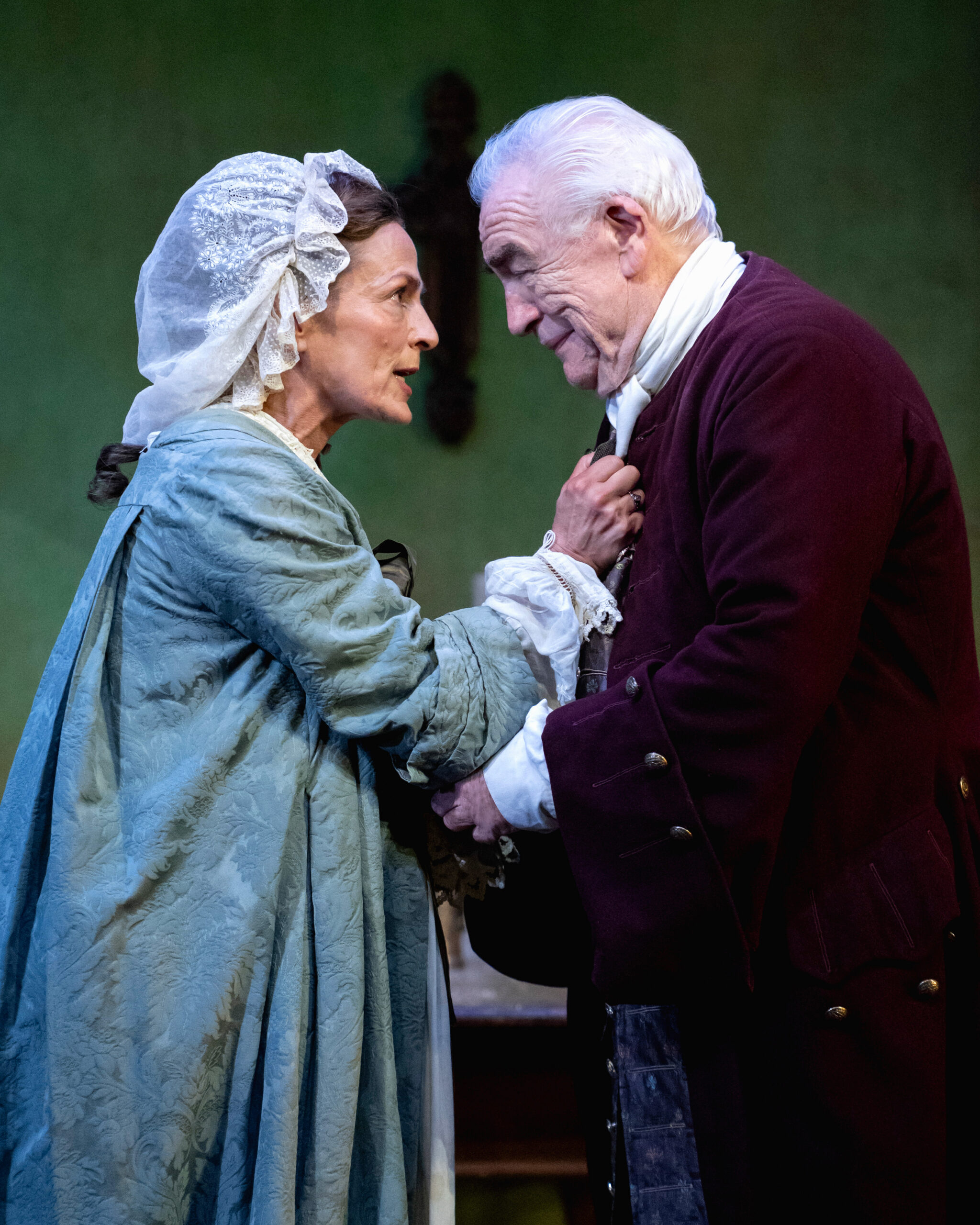
And then there is Nicole Ansari-Cox, who brings tremendous strength and emotional intelligence to the production. Her chemistry with her husband, Brian, is palpable, giving their scenes together an intimacy and authenticity that makes their relationship feel lived-in rather than merely performed. The connection between them adds an important emotional foundation to the play.
Ansari-Cox particularly commands the stage at the beginning of Act II with a powerful, stern monologue that brought audible gasps from the audience. It is one of those theatrical moments when a room seems to stop breathing. She demonstrates that she is more than capable of holding the stage opposite an actor of Cox’s stature—and, in that moment, she absolutely owns it.
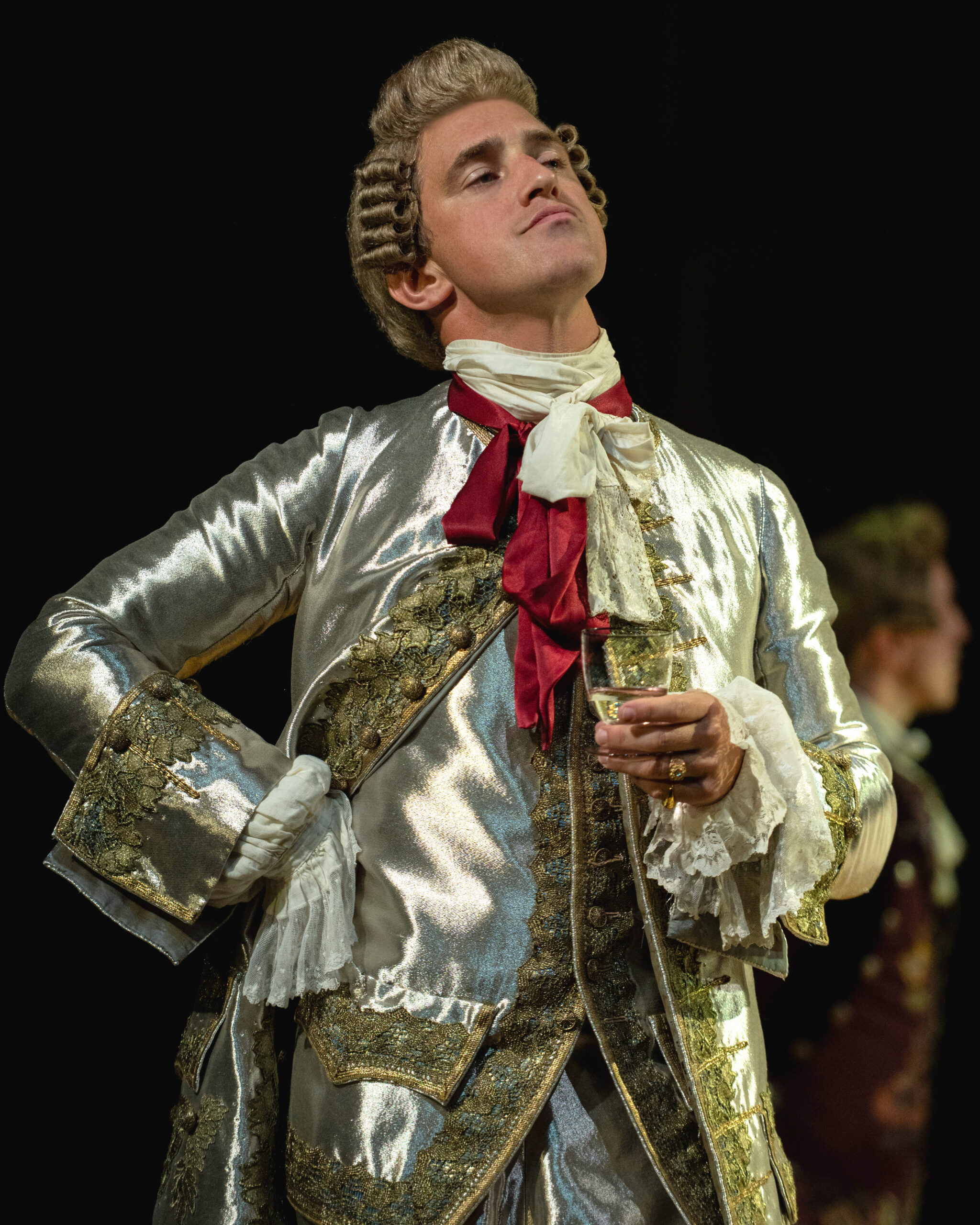
Stephen Hagan’s portrayal of King Frederick II provides another fascinating dimension to the production. Hagan embraces the king’s eccentricities and brings welcome flashes of humor to what could otherwise be an intensely serious historical drama. Yet there is always something unpredictable lurking beneath the humor. His Frederick keeps the audience guessing: What will this king do next? How far will he go? Is the charm genuine, calculated, or both?
That unpredictability makes Hagan’s performance particularly compelling. He brings theatricality and wit to Frederick while never allowing us to forget the power he possesses. The result is a character who can be amusing one moment and unsettling the next.
Jamie Wilkes, as Bach’s son Carl, brings another important perspective to the story. His performance helps illuminate the complicated dynamics surrounding Bach’s legacy, family, and artistic world. Wilkes provides a strong presence within an ensemble that understands the importance of making these historical figures feel like people rather than monuments.
Peter De Jersey also deserves considerable praise as Voltaire. He brings theatrical flair and personality to the role and more than holds his own among this impressive cast. His presence adds another layer of intellectual and dramatic energy to the proceedings, and he embraces the opportunity to make Voltaire memorable.
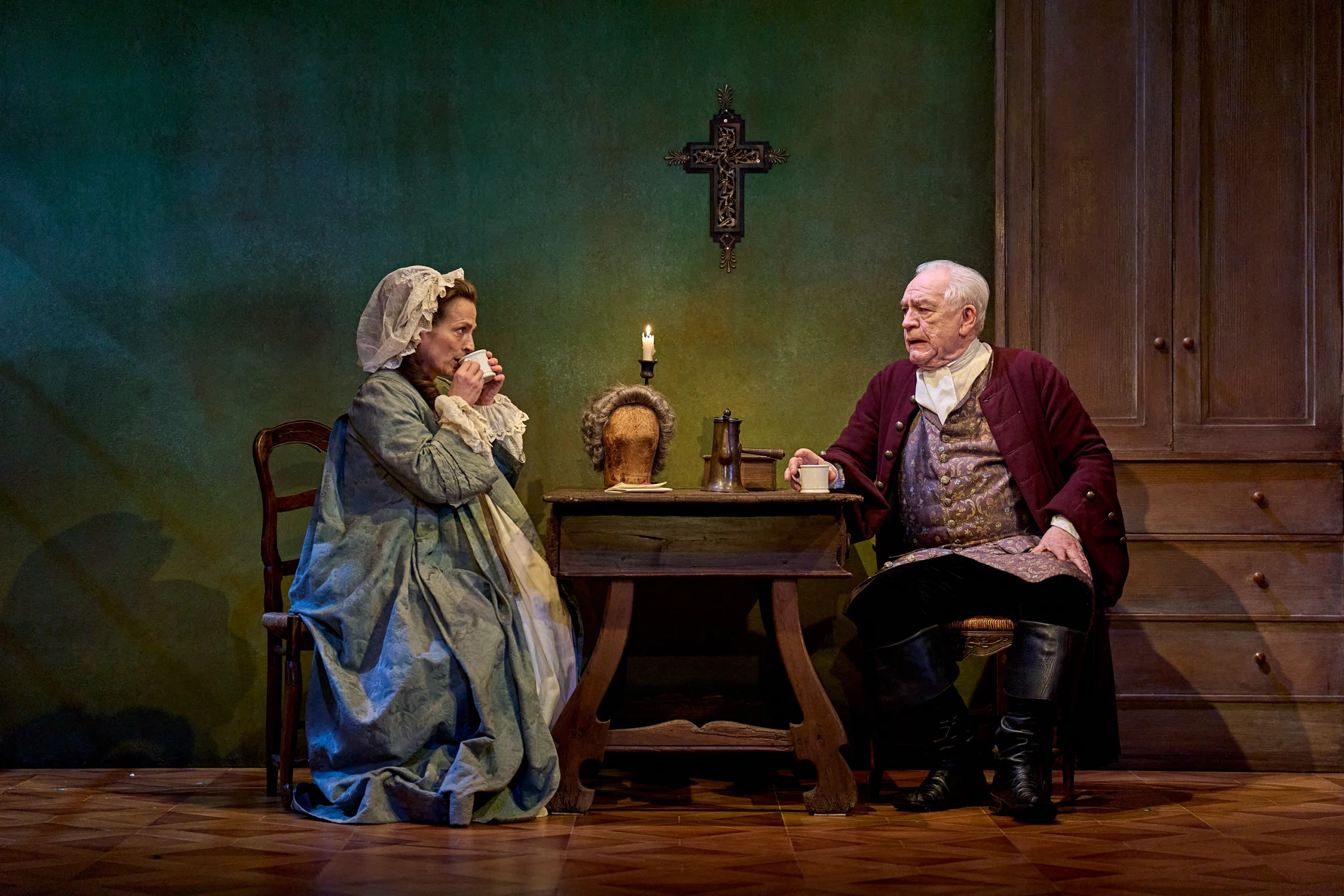
The production is equally impressive visually. Robert Jones’s set design is a particularly effective piece of storytelling. The contrast between the pious simplicity of Bach’s home and the gilded militarism of the Prussian court immediately establishes the opposing worlds at the heart of the play. The design doesn’t merely provide a backdrop; it helps tell the story. Bach’s world feels grounded in faith, family, and music, while the court projects wealth, power, spectacle, and authority.
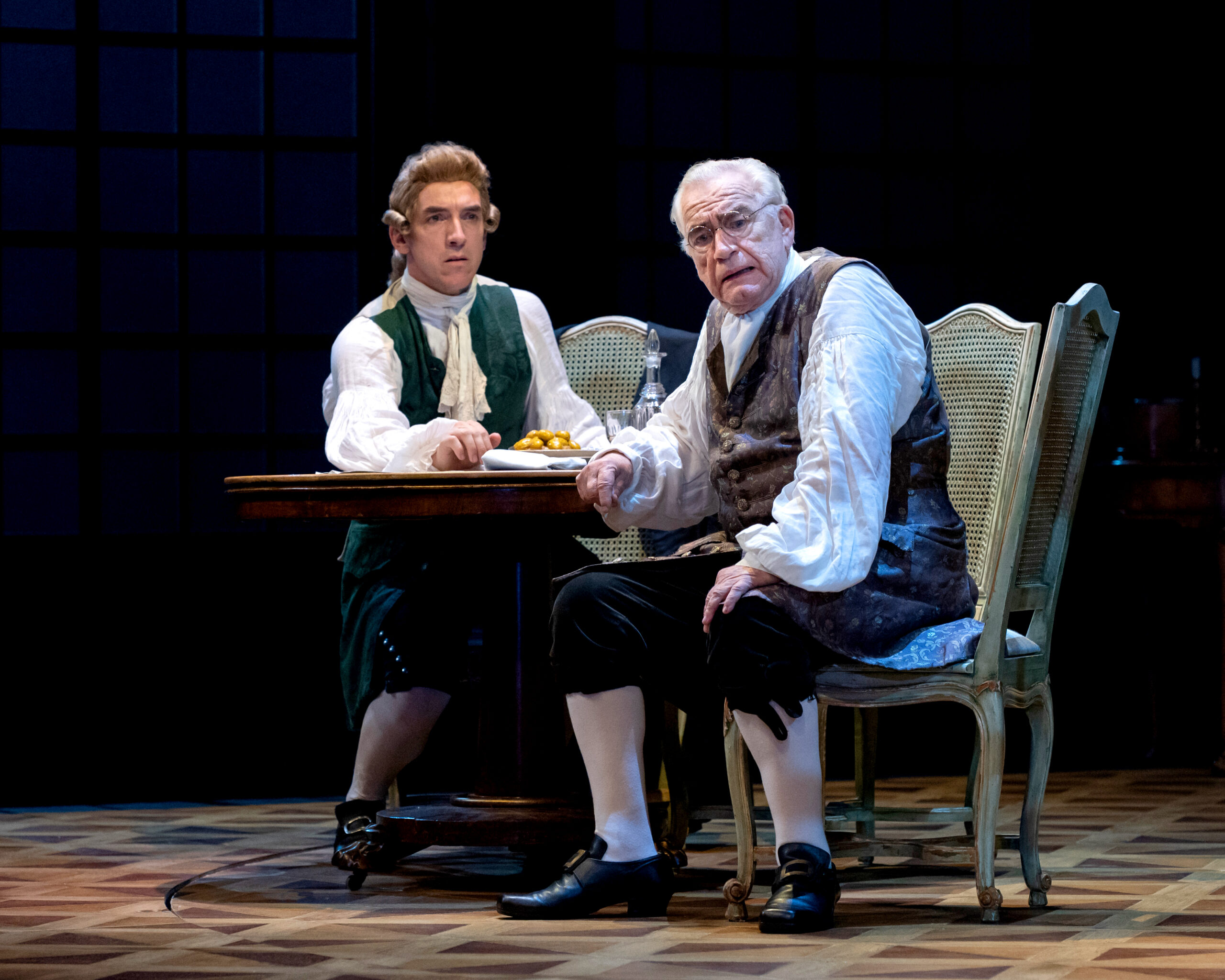
That visual contrast mirrors the larger conflict of The Score: the individual artist confronting institutions of power. What happens when artistic conviction meets political authority? How much should a great artist compromise? And what price is one willing to pay to remain true to one’s work and principles?
Those questions give the play resonance well beyond its historical setting.
But ultimately, The Score succeeds because of the performances. This is an exceptionally strong cast led by an extraordinary Brian Cox, whose portrayal of Bach is the kind of work theatergoers hope to encounter but rarely do. Cox brings the famous composer down from the pedestal of history and allows us to see the man behind the music—passionate, proud, complicated, vulnerable, and fiercely determined.
For Washington theater audiences, this is a production worth making time for. Whether you are a lifelong admirer of Bach, a fan of great acting, or simply someone who appreciates compelling theater, The Score has something to offer.
It is dramatic without losing its humanity, humorous without undermining its seriousness, and visually striking without distracting from the story.
Most importantly, it feels like theater—immediate, intimate, unpredictable, and alive.
The Score is a must-see production and a terrific start to the Shakespeare Theatre Company’s new season. If this is a sign of what’s ahead for the Shakespeare Theatre Company this season, Washington audiences have plenty to look forward to.
FINAL GRADE: A+
The Score makes its rounds at Shakespeare Theatre Company’s Sidney Harman Hall through its extended run of October 25th in Washington, DC. Running time is 2 Hours and 30 minutes with a 20-minute intermission. Children under 6 are not admitted.
To purchase tickets, click HERE.
About The Author