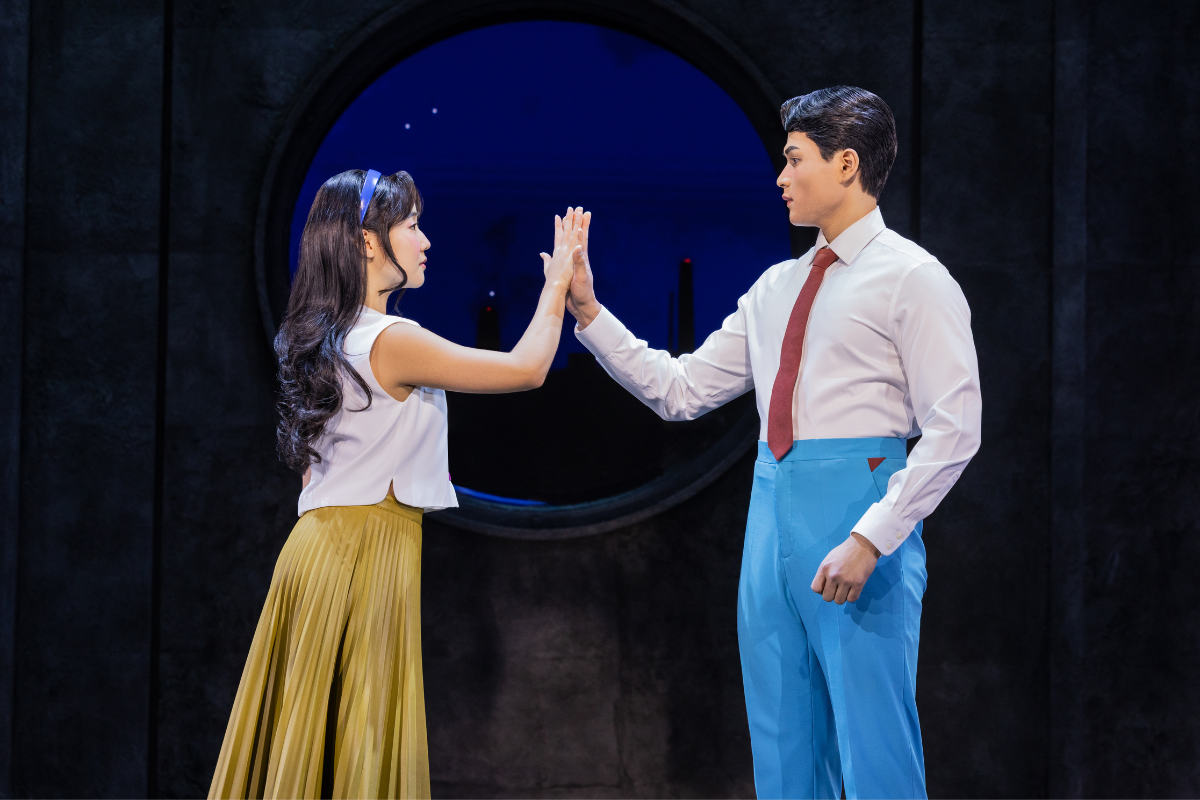
Photos by Evan Zimmerman for MurphyMade
There are musicals that entertain you & move you, and then there are musicals that quietly sneak into your heart and refuse to leave. Maybe Happy Ending, now playing at the Hippodrome Theatre in Baltimore, belongs firmly in the latter.
What initially sounds like an unusual premise—a romantic musical about outdated robots—becomes a remarkably beautiful exploration of love, loneliness, memory, aging and what it truly means to be human. After winning six Tony Awards, including Best Musical, it is easy to understand why this musical production has connected so deeply with audiences. It’s so clever without being cold, sentimental without becoming overly sweet, and visually inventive from beginning to end.
At the center of the production are Claire Kwon as Claire, a state-of-the-art HelperBot 5, and Steven Huynh as Oliver, a retired HelperBot 3. Both performers have served as stand-ins for the original Broadway production and seeing them step into the spotlight as the leads on the national tour is particularly rewarding. Their familiarity with the material is evident. They know these characters inside and out, bringing a remarkable level of precision to their performances.
Kwon gives Claire an appealing combination of mechanical exactness and growing emotional curiosity. Huynh’s Oliver is equally compelling, particularly as he gradually rediscovers a sense of purpose and connection. Together, they create a believable relationship between two machines who slowly discover something neither was programmed to expect: love.
Their chemistry is one of the production’s greatest strengths. The characters may be robots, but their awkwardness, uncertainty, excitement and vulnerability feel unmistakably human. Both performers also deliver beautifully in the musical numbers, balancing the show’s technical choreography with genuine emotional warmth.
A special shout-out goes to Francisco Javier González, who plays Gil Brentley, a spectral jazz singer who appears to offer musical commentary throughout the story. González brings a wonderful old-school jazz sensibility to the role, giving the production an almost dreamlike quality. His performances add another layer of nostalgia and atmosphere while providing some of the show’s most memorable musical moments.
James Seol also deserves recognition for his work as James/Junseo. Playing multiple characters, especially the father and son in the musical, requires patience and an ability to make each personality distinct, and Seol handles both roles with impressive energy and precision.
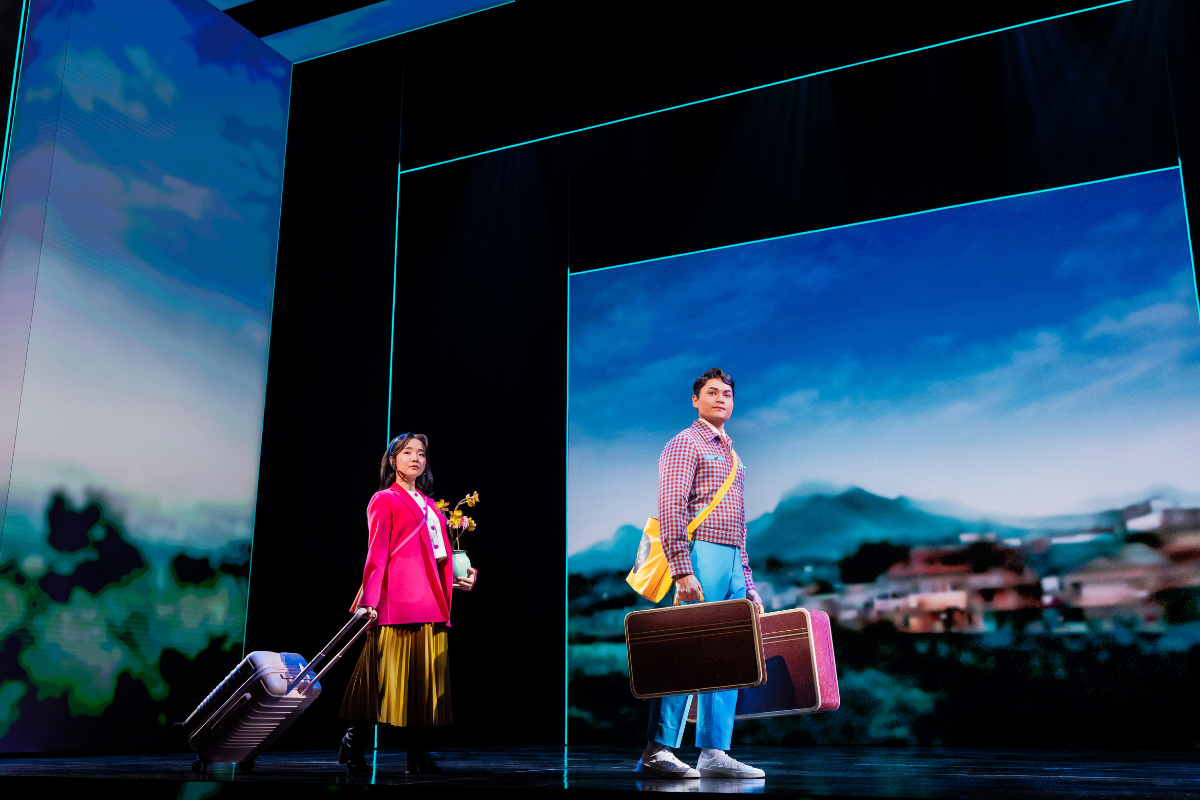
Another major star of Maybe Happy Ending is its innovative scenic design. Rather than simply serving as a backdrop, the set becomes an essential part of the storytelling. The production creates a world that feels simultaneously futuristic and nostalgic, with clever transitions and visual details that reinforce the characters’ emotional journeys. It is a uniquely theatrical design that continually finds creative ways to expand the world of the story.
Beneath the charming premise, Maybe Happy Ending explores several surprisingly profound themes.
The musical asks whether love is valuable precisely because it is unpredictable and sometimes painful. Oliver and Claire are machines designed to serve humans, yet their relationship becomes the most meaningful thing in either of their lives. The show suggests that love cannot be measured by efficiency or practicality.
The characters’ status as outdated technology provides a clever metaphor for aging and the fear of becoming irrelevant. What happens when the world moves on? And does becoming obsolete mean that one’s life has lost its value? The musical approaches those questions with tenderness rather than despair.
At its heart, this is a story about two isolated individuals discovering the courage to connect. Oliver and Claire have spent much of their existence alone, and their relationship demonstrates how even an unexpected connection can transform a life.
The production also understands the emotional power of memory. Old music, forgotten objects and remnants of another era become reminders that our past experiences help define who we are. Memory may be imperfect, but it gives our lives meaning.
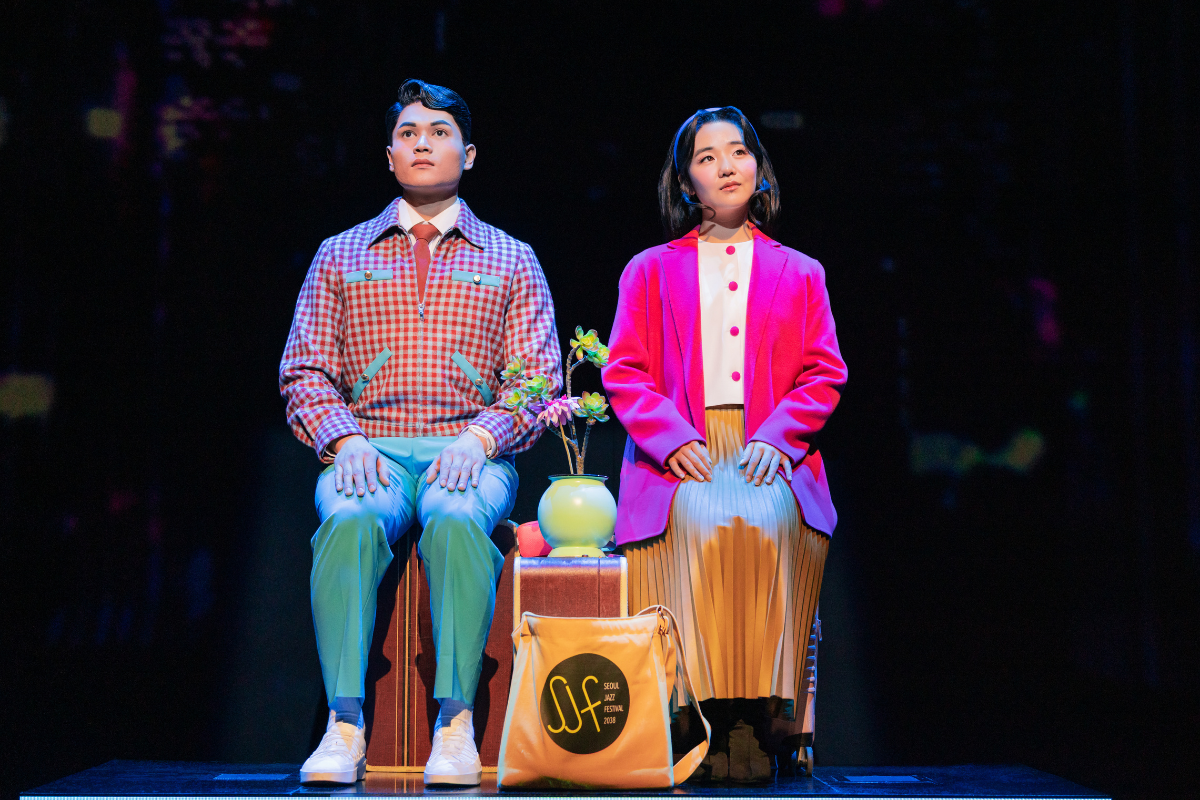
What makes Maybe Happy Ending so special is that it never treats its robot characters as merely a gimmick. Instead, it uses them to examine the things that make us human.
This musical is a must-see. The real reward is sitting in a theatre, watching two supposedly obsolete robots discover that perhaps the most important thing in life is simply having someone with whom to share it. Maybe Happy Ending may be about robots, but ultimately, it is a musical about us and our human spirit.
FINAL GRADE: A+
Maybe Happy Ending is touring across America. It will be coming to the National Theatre in Washington, DC (October 6 – 11th) Tickets are available thru Ticketmaster.
Run Time: 1 hour and 40 minutes (no intermission). Recommend for ages 8 and up.
About The Author